Tuesday, July 1, 2008

Loupe: Another Piece of "Uselessness"


Uniden, a Japanese camera accessory maker launched a new magnifying glass for LCD screens of digital cameras on their website. The magnifying glass can be used by owners of SLRs and compact digital cameras with LCD screen size of 3 inches. The images are magnified three-fold, and it's claimed that it will not scratch the surface of LCD screens.

I have no idea who will buy -and use- this utterly useless piece of equipment...unless it's an obsessive pixel/histogram-peeper, with $47 to burn.

Via CrunchGear
Read more »

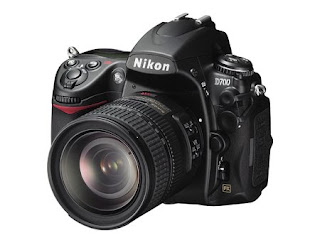
Nikon D700 Announced


I'm not a Nikon user, but I heard much about the newly announced Nikon D700 at the Foundry Photojournalism Workshop in Mexico City. It was just a rumor then, but some of its specs were being discussed among the photojournalists there. It was described by a fervent Nikon user as a certain Canon 5D "killer".

The British Journal of Photography has published an article describing the D700 as having many of the Nikon D3's features, including full frame, a 12.1 million pixel resolution, a 36x23.9mm CMOS sensor and a reinforced D300 body. The price is said to be GBP 2000 ($4000), however this includes VAT. I read elswehere that it'll be around $3000 here in the US.

The New York Times also has an article on the D700

Only time tell if the D700 is really a Canon 5D "killer", or if the rumored new 5D II regains Canon's momentum.

Michael Reichmann of the Luminous Landscape shares his thoughts about the D700 and the coming match-up with the Canon 5DII here
Read more »

Monday, June 30, 2008

Rant: My Blog My Rules

I know. I haven't been ranting for a while, and some of my readers tell me they miss my acerbic diatribes. I haven't mellowed at all, it's just that I didn't have much to rant (at least of relevance to this blog) about...however, before I lose my so-called acerbic trademark, here's my position about what gets on my blog and what doesn't.

By the way, at the Foundry Photojournalism Workshop in Mexico City which had over 160 attendees, I was taken aback by the surprisingly large number of photographer/photojournalists (famous and emerging) who knew of The Travel Photographer blog and of my photography. This proves to me two major facts: the power of blogging and the power of branding about this earlier on TTP (I've posted about this earlier on TTP here).

But I digress. Here are the general terms of acceptance that cover what kind of photographic work is, and will be, posted on The Travel Photographer. Firstly, this blog is ad-free, and as I'm not beholden to anyone (corporate or individual), I only post what I like. This is also known as editorial privilege...and it's what counts. There are thousands of blogs dealing with photography and some are much better than mine, so photographers can pick and choose.

My preferences are too many to list, but photo essays/stories, in multimedia or stills, appeal to me a great deal. Work by emerging photographers are always welcome, provided it deals with travel (non stock stuff) and editorial. Particularly interesting is photography that can be described as ethnographic, and deals with religious or secular rituals, tribal cultures, among others. I have a hard time with websites that have dinky photographs, but if the subject matter is really interesting, you're in. If you're a photographer with a travel portfolio better destined to the pages of Travel & Leisure magazine, you don't need this blog.

In terms of geographic preferences, while my own photography is biased towards Asian and South Asian cultures, it doesn't mean that this is true for what gets on my blog. I'm not that interested in what is generally defined as "Western" photo projects...so projects of European and/or North American provenance don't really excite me that much. On the other hand, photographic work by emerging photographers from South Asia, Asia, the Middle East, Africa and South America are especially welcome....but please, have functioning websites.

If you want to know what photography work turns me on, drop by my website or if you have the time, explore this blog. You'll know.
Read more »

Tewfic El-Sawy: Los Migrantes


Here's a multimedia photo essay I produced about the migrants from Central America and beyond, who pass through Mexico City by hitching rides on freight trains. Their ultimate destinations are the southern states of the United States, where they hope to find jobs.

Similar to the hobos of the past in our own country, the migrants have support from generous people along the way. The last frames of the slideshow are of famished migrants given hot tamales by an impoverished household in the La Lecheria neighborhood of Mexico City. I spoke with them in my less-than-fluent Spanish, and it's impossible not to be compassionate with human beings trying their best to improve their lives by any means.

A number of participants in my class at the Foundry Photojournalism Workshop produced similar photo essays.

Los Migrantes by Tewfic El-Sawy
Read more »

Sunday, June 29, 2008

Tom Wool: ONE

Photograph © Tom Wool-All Rights Reserved

Tom Wool is a British photographer currently living in NYC. I'd describe his work as "ethnographic photography" since the work he presents on his website ONE is of 160 portraits made during his travels to Bolivia, Irian Jaya, Kenya, Morocco, PNG, Suriname, Tanzania, Tibet and Venezuela.

His biography tells us that he worked in a number of fashion publications in the 1980s, and this background served him extremely well in photographing his subjects. Tom traveled to Tibet to work on a project, and with the sale of his photographs, he raised enough funds to build a school in Tzombuk, where some of his portraits were made.

We've been spoilt by the ever-increasing web's bandwidth, and are now used to much larger images than what Tom Wool's are. Perhaps an updated website is in the planning?
Read more »

Saturday, June 28, 2008

Amanda Koster: Salaam Garage

Photograph © Amanda Koster-All Rights Reserved

Amanda Koster is the force behind Salaam Garage Adventures, which connects travelers and enthusiasts with non-governmental organizations (NGOs). Travelers commit to creating and sharing unique, independent social media that raises awareness and causes positive change. The rest of the adventure is spent touring around the region, experiencing and exploring the culture and environment with an entirely new context.

I've written about Amanda and her work with Moroccan women in an earlier post on TTP, and she's an internationally recognized photographer whose mission to raise the general public's awareness by documenting some of the world’s more compelling issues.

Her biography speaks for itself, but I'd like to highlight that "she combines her anthropology background with photographic and media-making skills to create inspiring media content as a means for powerful communication, storytelling and learning."

I couldn't have described her work any better, but I would've certainly added that her work is immensely sensitive.
Read more »

Eric de Vries: Thailand

Photograph © Eric de Vries-All Rights Reserved

Eric de Vries lives in Phnom Penh, Cambodia, where he's been travelling since 2000. He's working on a long-term project titled 'Still Life in Khmer Style' that covers landscapes, temple scenes and Buddha statues. He has already produced several series, most of them in black and white, and published 3 books so far.

The new series Breaking The Clouds (Over Ayuthaya) was recently photographed during a trip to Thailand, while the One-Three-Six-series is a documentary about Street 136 in the heart of Phnom Penh.

Both series will be ready for publication during the second half of this year, but a preview of the two series can bee seen on Eric de Vries' website
Read more »

Brent Stirton: Omo Valley/Bull Jumping

© Brent Stirton/Courtesy Discovery Channel

I've featured Brent Stirton's fabulous work on the Omo Valley a few months ago, and now bring him back with a Quicktime movie of the bull-jumping ceremony (click the small arrow above to start it).

The bull-jumping ceremony is an important ritual performed by some of the tribes of the Omo Valley region of southern Ethiopia, and is considered a sort of a rite of passage in a tribal man’s life. Bull jumping is a prerequisite for a man to take a wife and have children, and it involves him undergoing a number of rituals before leaping onto and running over the backs of cattle.

I witnessed the bull-jumping ceremony not far from Turmi, a village in the Omo Valley, and was taken aback (an understatement) by a preceding ritual involving the women of the Hamar tribe tribe being whipped by the men in their families.
Read more »

Friday, June 27, 2008

Aditya Kapoor: Goa

Photograph © Aditya Kapoor-All Rights Reserved

Aditya Kapoor tells us in his biography that his two great passions are travel and photography, and that living in a heritage country such as India provided him a wealth of "diverse communities, architectural marvels, nature and different traditions waiting to be explored".

His photography has been published in various publications such as Tehelka magazine, Hindustan Times, Outlook, Indian Express, India Today and Mail Today, and he is actively involved with NGO’s such as Ithihaas, The National Association for the Blind, Tamana School and SECA.

Aditya's website has many galleries, and I chose his work on Goa to show here. I'm a fan of much larger photographs on photographers' websites, but unfortunately bandwidth realities have to be taken into account. I'm always glad to be able to show the work of emerging and promising photographers, and Aditya is one of them.
Read more »

Lyle Owerko: The Samburu

Photographs © Lyle Owerko-All Rights Reserved

Raised in Canada, Lyle Owerko is a photographer, a film maker and, in my opinion, a first class ethnographer. His current projects seek to bridge ethnic borders by documenting cultural groups, such as the Samburu, for the improvement of the human condition.

According to Wikipedia, the Samburu are ethnically related to the Maasai. The name 'Samburu' is also of Maasai origin and is derived from the word 'Samburr' which is a leather bag used by the Samburu to carry a variety of things. The Samburu practice polygynous marriage, and a man may have multiple wives. A Samburu settlement is known as a nkang or manyatta. Each woman in the household has her own house, which she builds out of local materials, such as sticks, mud and cow dung.

From Lyle's website, you'll find that he was the photographer whose image of the Twin Towers on September 11, 2001 was published by the Time magazine on its cover, but it's his ethnographic work that caught my attention, and which brings him to The Travel Photographer blog.
Read more »